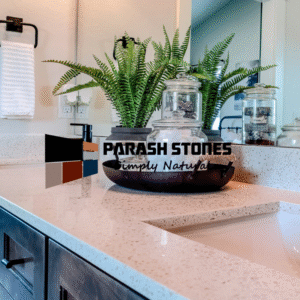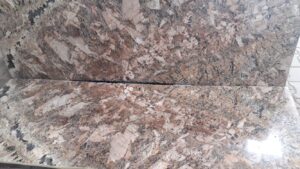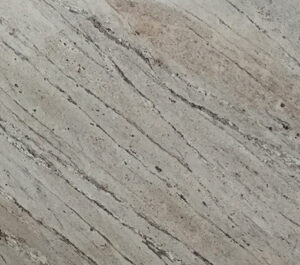
Choosing the right natural stone for your kitchen countertop is one of the most important decisions when designing or renovating your kitchen. Among all countertop materials, granite and marble remain the top choices for homeowners, architects, and interior designers worldwide.
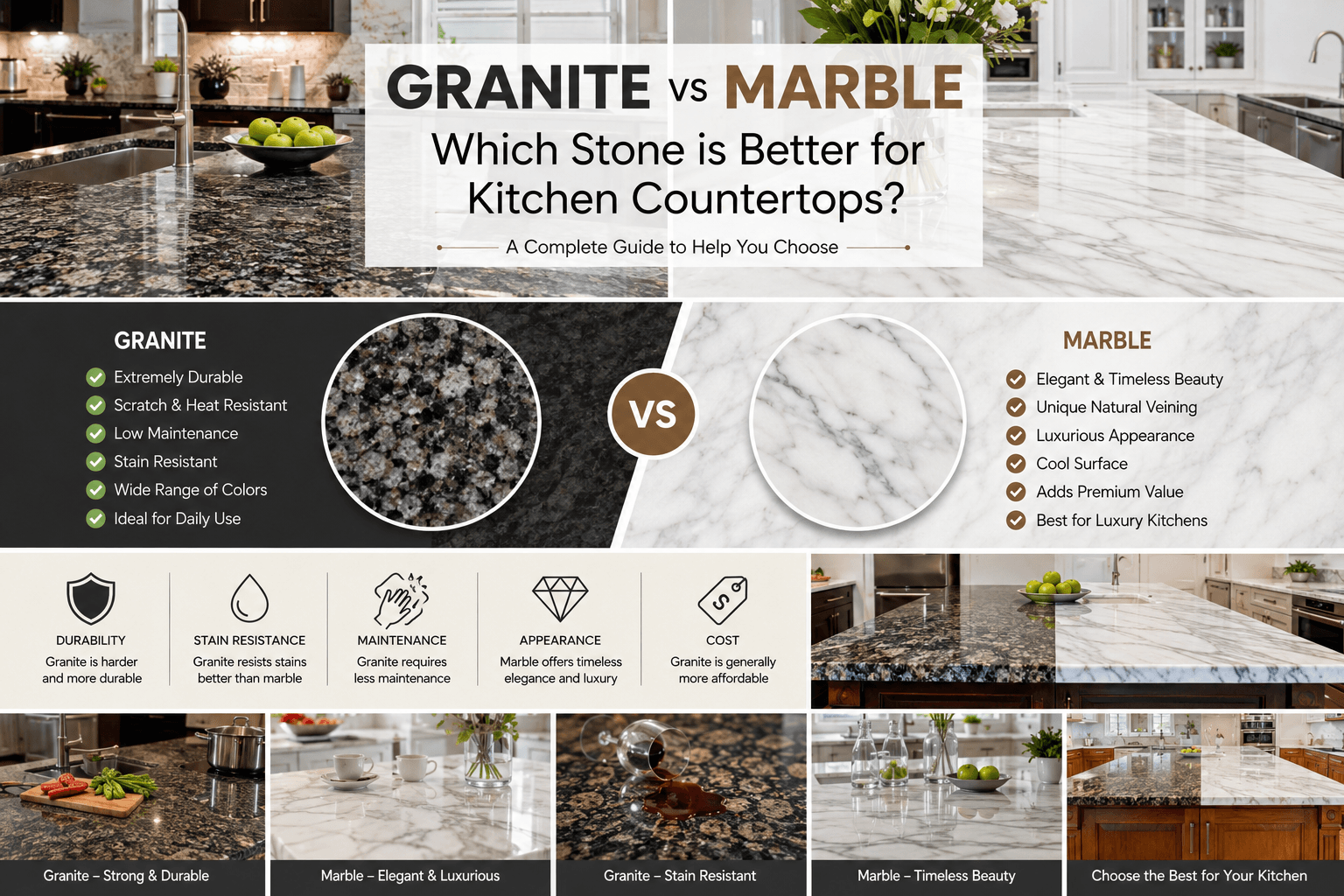
Both stones offer timeless beauty and exceptional value, but they differ in durability, maintenance, appearance, and cost. So, which stone is better for kitchen countertops—granite or marble?
In this comprehensive guide, we’ll compare granite and marble in detail to help you make the right choice.
What is Granite?
Granite is a natural igneous rock formed from cooled magma beneath the Earth’s surface. It is composed mainly of quartz, feldspar, and mica, making it one of the hardest natural stones available.
Granite is known for:
- Exceptional durability
- Scratch resistance
- Heat resistance
- Wide variety of colors and patterns
- Low maintenance
It is widely used for kitchen countertops, islands, flooring, stairs, and commercial spaces.
What is Marble?
Marble is a natural metamorphic stone created when limestone undergoes intense heat and pressure over millions of years.
It is famous for its:
- Elegant veining
- Luxurious appearance
- Smooth polished finish
- Timeless beauty
- Premium appeal
Marble is commonly used in luxury kitchens, bathrooms, hotels, and decorative interiors.
Granite vs Marble: Quick Comparison
| Feature | Granite | Marble |
|---|---|---|
| Durability | ⭐⭐⭐⭐⭐ | ⭐⭐⭐ |
| Scratch Resistance | Excellent | Moderate |
| Heat Resistance | Excellent | Good |
| Stain Resistance | High (Sealed) | Moderate |
| Maintenance | Low | Moderate to High |
| Appearance | Speckled & Natural Patterns | Elegant Veins |
| Porosity | Low | Higher |
| Lifespan | 50+ Years | 40–50 Years |
| Cost | Moderate | Moderate to Premium |
| Best For | Busy Kitchens | Luxury Kitchens |
1. Appearance
Granite
Granite features natural mineral patterns with speckles, crystals, and unique color variations.
Popular granite colors include:
- Black Granite
- White Granite
- Grey Granite
- Red Granite
- Brown Granite
- Blue Granite
- Green Granite
Every slab is unique, making your kitchen one of a kind.
Marble
Marble is admired for its dramatic natural veining.
Popular marble colors include:
- White Marble
- Grey Marble
- Black Marble
- Beige Marble
- Green Marble
If your goal is luxury and elegance, marble is difficult to match.
2. Durability
Granite is significantly harder than marble.
It easily withstands:
- Heavy cookware
- Daily cooking
- High traffic
- Frequent use
Marble is softer and can develop scratches or chips over time.
3. Scratch Resistance
Kitchen countertops experience constant cutting, sliding utensils, and daily wear.
Granite has excellent scratch resistance.
Marble scratches more easily because of its softer composition.
Although using a cutting board is always recommended, granite handles accidental scratches much better.
4. Heat Resistance
Both stones tolerate heat well.
Granite can easily withstand hot pots and pans without damage.
Marble also handles heat effectively but prolonged exposure may affect the finish over time.
Using trivets is recommended for both materials.
5. Stain Resistance
Kitchen countertops regularly come into contact with:
- Coffee
- Wine
- Lemon juice
- Oil
- Curry
- Tomato sauce
Granite has low porosity when properly sealed, making it highly resistant to stains.
Marble is naturally more porous and can absorb liquids if spills are not cleaned immediately.
6. Maintenance
Granite requires minimal maintenance.
Simple care includes:
- Daily cleaning with mild soap
- Occasional sealing every few years
- Soft cloth cleaning
Marble requires more attention.
Because it is porous, it should be sealed regularly and acidic substances should be cleaned immediately.
7. Cost Comparison
The price depends on:
- Stone quality
- Origin
- Thickness
- Finish
- Edge profile
- Installation
Generally:
- Granite offers better value for money.
- Marble often costs more due to its luxurious appearance and premium demand.
If you’re working within a budget while still wanting a premium look, granite is an excellent option.
8. Lifespan
With proper care:
- Granite countertops can last over 50 years.
- Marble countertops can last 40–50 years.
Both are long-term investments that add value to your property.
9. Best Applications
Granite is Ideal For
- Family kitchens
- Heavy cooking
- Restaurants
- Rental properties
- Outdoor kitchens
- Commercial projects
Marble is Ideal For
- Luxury homes
- Decorative kitchen islands
- Premium villas
- Boutique hotels
- High-end interiors
Pros and Cons of Granite
Pros
- Extremely durable
- Scratch resistant
- Heat resistant
- Stain resistant
- Low maintenance
- Affordable compared to many premium stones
- Wide variety of colors
- Long lifespan
Cons
- Heavier than many countertop materials
- Requires professional installation
- Needs periodic sealing
Pros and Cons of Marble
Pros
- Elegant natural veining
- Premium appearance
- Timeless beauty
- Increases property value
- Naturally cool surface
Cons
- Softer stone
- Scratches more easily
- Higher maintenance
- Can stain from acidic foods
- Requires regular sealing
Which Stone Should You Choose?
Choose Granite if you want:
- Maximum durability
- Low maintenance
- Excellent stain resistance
- Heat resistance
- Better value for money
- A countertop for daily family use
Choose Marble if you want:
- A luxurious kitchen
- Unique natural veining
- High-end interior aesthetics
- Elegant statement countertops
- Premium architectural appeal
Why Choose Natural Stone Countertops?
Natural stone countertops provide numerous long-term benefits:
- Timeless beauty
- Unique natural patterns
- High durability
- Increased property value
- Easy maintenance (with proper care)
- Excellent heat resistance
- Long service life
- Sustainable and eco-friendly material
Whether you select granite or marble, investing in natural stone enhances both the functionality and elegance of your kitchen.